To DJ or Not To AI?
Creation & Re-creation
I recently had a conversation with a DJ that genuinely caught me off guard. While explaining him that I create music with the help of artificial intelligence, I watched his expression change. Within seconds, I was no longer someone writing songs, building a narrative universe and crafting a genuine artistic project. In his eyes, I had become just another person flooding streaming platforms with soulless AI-generated music.
He didn't ask a single question about my work. He wasn't curious about my process. He had no interest in the stories I write, the characters I create, the emotions I try to express or the hundreds of creative choices behind every Visa Run Orchestra release. The verdict came long before the first listen. I found it disappointing. But above all, I found it remarkably simplistic. I know perfectly well what I am not. I'm not a classically trained composer. I don't read sheet music. I don't claim the technical mastery of musicians who have devoted decades to their instrument. But I also know exactly what I do.
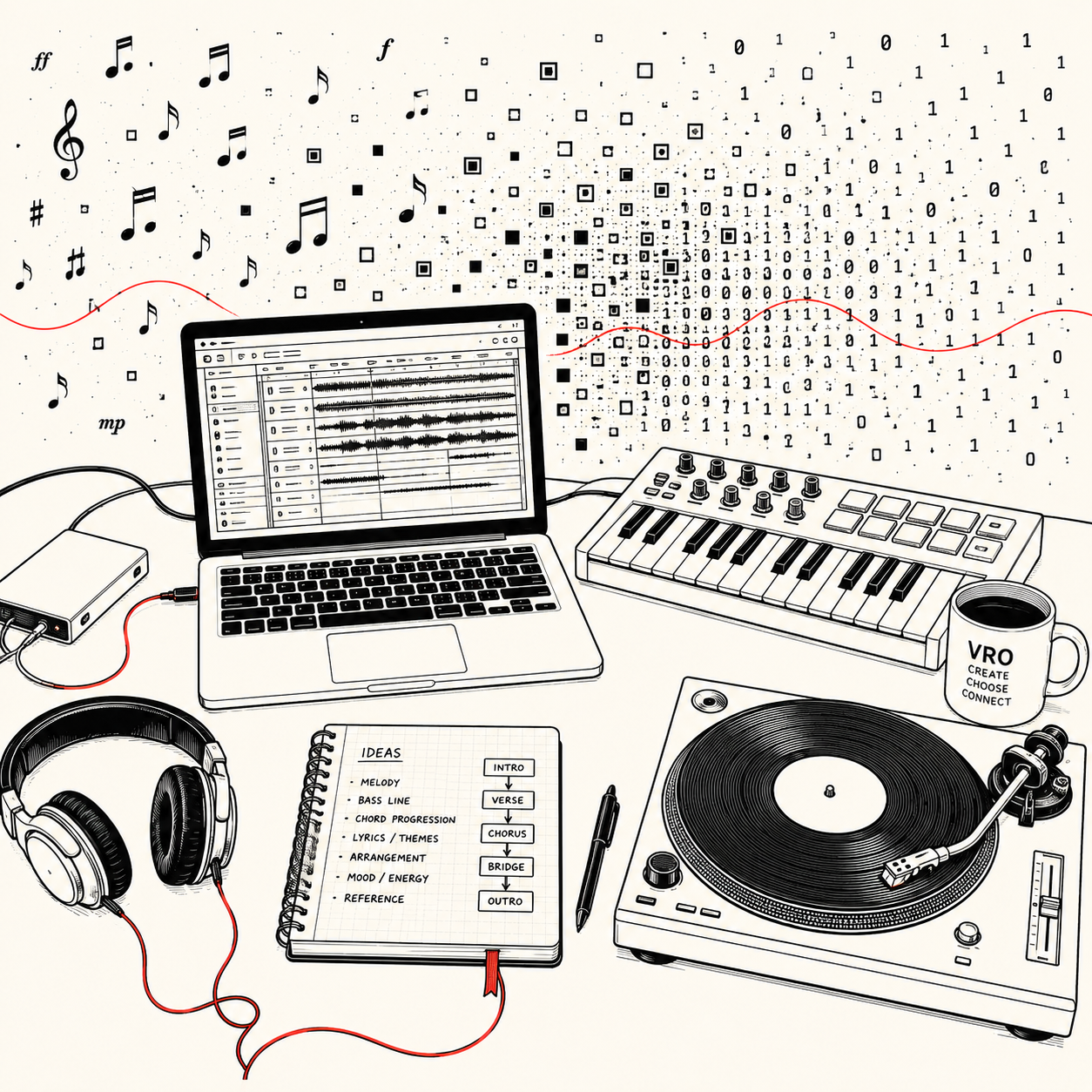
I write every lyric. I invent every character. I tell every story. I hum melodies. I search for a musical identity. I shape dramatic arcs. I define vocal intentions, rhythms and emotions. I generate dozens of versions, discard most of them, rebuild others and fit them into a larger narrative until everything feels right. I may not compose in the traditional academic sense. But I do compose in the oldest sense of the word. I choose. I assemble. I reject. I refine. I reshape. Every song is the result of hundreds of creative choices. Art, perhaps, begins there.





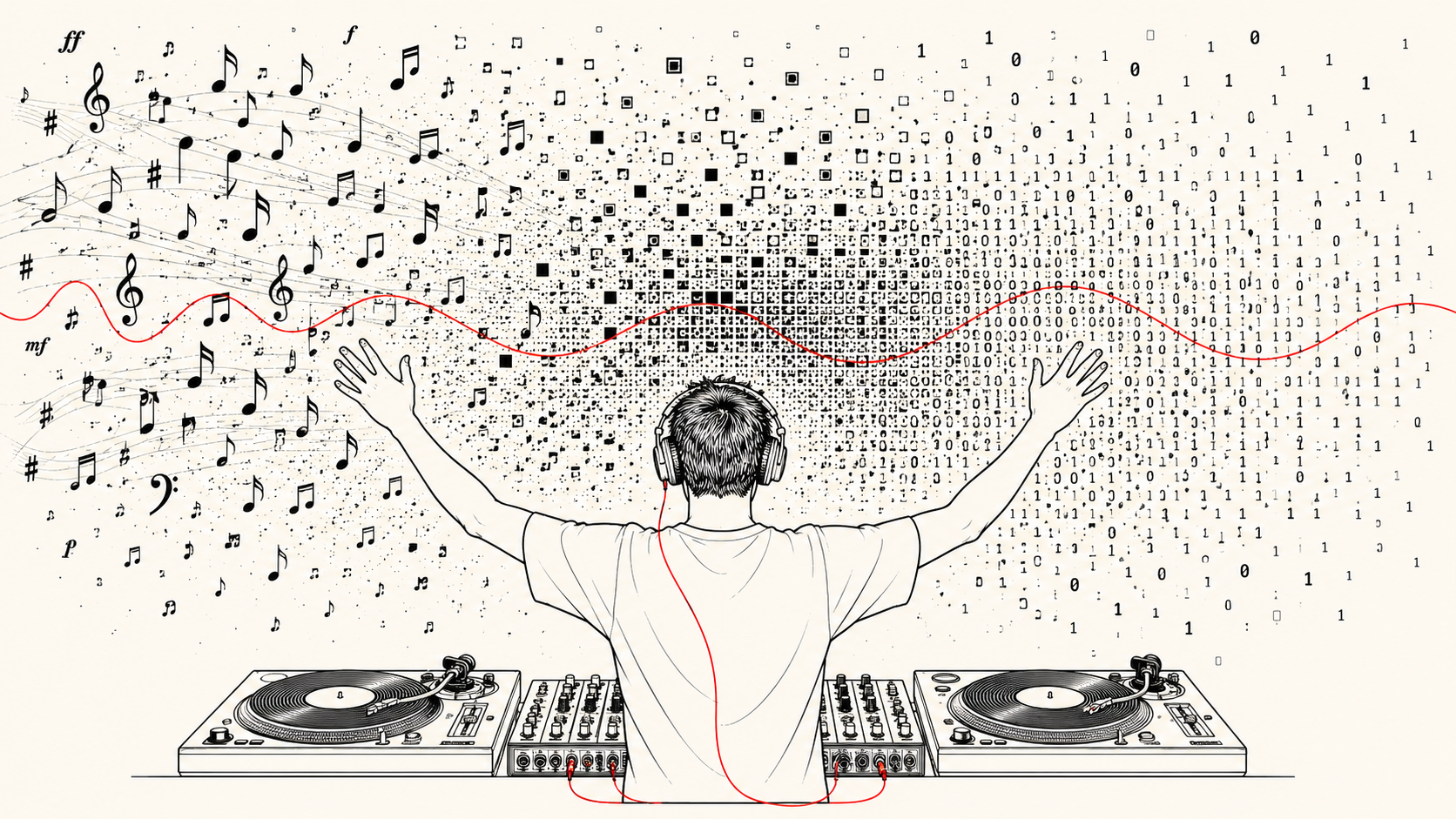
A paintbrush generates possibilities. So does a guitar. A piano. Pro Tools. Ableton. Tomorrow, artificial intelligence will do the same. None of them can choose. Only an author can. Tools generate possibilities. Authors make choices. Which is precisely why being lectured by a DJ felt strangely ironic. Not because I believe DJs aren't artists. Quite the opposite. The best DJs transformed selection into an art form. They don't necessarily compose every note they play, but they choose, sequence, remix, slow down, speed up, layer and reinterpret existing music to create an entirely new experience. Their creativity lies in taste, culture, rhythm and their ability to tell a story using music they didn't necessarily write themselves. In other words: curation.
There is absolutely nothing wrong with that. In fact, it deserves respect. So how can someone spend decades defending curation as a legitimate creative practice, only to claim that selecting, transforming and directing cease to be creative the moment the tool changes? I'm not asking DJs to consider artificial intelligence a musical instrument. I'm simply asking them to extend the same openness they once asked the world to extend to them.
The irony becomes even greater when some of the loudest critics of AI-generated music happily use AI to create their flyers, posters, social media visuals and marketing campaigns. Apparently replacing a graphic designer raises few objections. Assisting a songwriter, however, is where the outrage begins. As if visual artists somehow mattered less than musicians. As if images were disposable while music remained sacred. A curious hierarchy of the arts. Snobbery often has blind spots.
To be clear, I have no desire to defend the content farms releasing hundreds of anonymous AI tracks every week in the hope of gaming streaming algorithms. That isn't creativity. It's industrial production. And I fully understand why it worries musicians. But confusing those operations with an author using AI as one tool among many is like confusing a DJ crafting a meaningful musical journey with someone simply pressing play on a Spotify playlist during dinner. The problem isn't the tool. The problem is the absence of an author.
In a recent interview with Billboard, Mick Jagger stated that using AI is perfectly acceptable as long as it serves to create something original, something driven by the artist's own ideas, rather than imitating another musician's style or voice. I couldn't agree more.
I'm not trying to make Freddie Mercury sing again. I'm not trying to fabricate a lost Beatles record. I'm not interested in cloning anyone. I'm simply trying to tell my own stories using the tools of my own time. Since launching Visa Run Orchestra, the strongest criticism I've personally encountered has rarely come from writers, filmmakers, composers or artists deeply engaged in their own creative practice. It has almost always come from DJs. Thankfully, there are a few wonderful exceptions. They know who they are.
I didn't write this article to defend artificial intelligence. I wrote it to defend something far older. We shouldn't recognise artists by the tools they use. We should recognise them by the choices they make, by the uniqueness of their perspective and by the courage with which they sign their work.
Tools will always generate possibilities. Authors are the ones who give those possibilities meaning.
NB: Visa Run Orchestra celebrates three months since its very first release. Thank you to everyone who has listened, shared, supported or simply taken the time to explore this little musical universe. Your curiosity and encouragement mean more than you know. Here's to the next chapter.